

Strategic CFO delivering finance transformation and sovereign digital infrastructure.
I am a visionary CFO and Strategic Leader with over 20 years of experience specializing in finance transformation and digital governance. I deliver robust financial infrastructure, scaling strategies, and board-level advisory for complex DigiTech and FinTech environments.
adminz
-
March 14, 2026
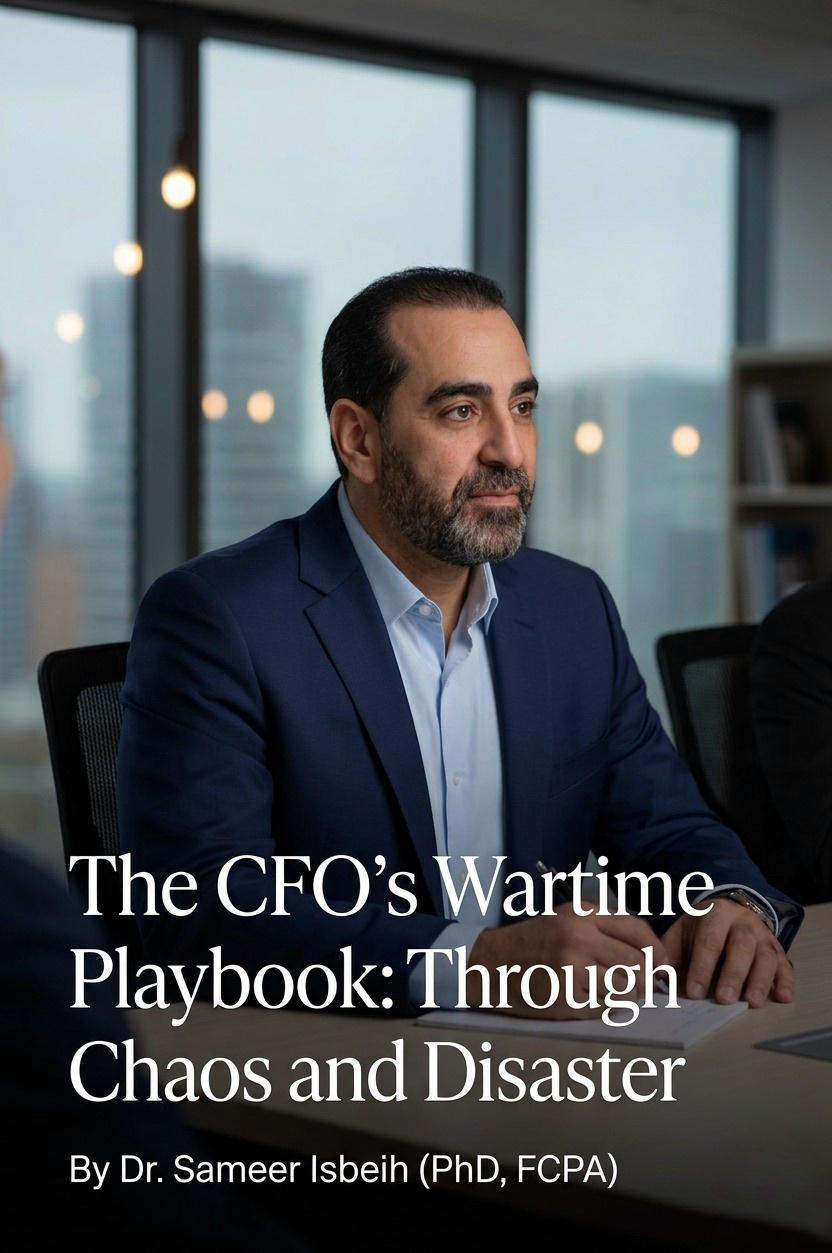
The CFO in the Eye of the Storm: Leading Through War and Crisis
By Dr. Sameer Isbeih (PhD, FCPA)
When global markets are stable, the CFO is an architect of growth. But when the sirens sound—be it from a geopolitical conflict, a natural disaster, or a sudden economic collapse—the role shifts instantly. In times of war and crisis, the balance sheet isn’t just a financial statement; it becomes a survival blueprint.
Having managed complex financial architectures for national infrastructure and defense-sector projects, I have seen firsthand that crisis management is where a CFO’s “academic rigor” meets “field-level grit.”
1. Cash as a Strategic Shield
In a crisis, the old adage “Cash is King” becomes an absolute law. The first duty of a CFO is to secure immediate liquidity. This isn’t just about hoarding capital; it’s about “Tactical Cash Preservation.” We must move beyond standard projections and enter a “zero-based” mindset. This involves stress-testing every expense under extreme scenarios. Can the organization survive if revenue drops to zero for 90 days? How quickly can we pivot from CAPEX (Capital Expenditure) to OPEX (Operational Expenditure)? In the eye of the storm, a CFO must be the one to make the hard, cold calls to ensure the heart of the business keeps beating.
2. Financial Intelligence vs. Information Fog
One of the greatest challenges in war or disaster is the “fog of war”—the lack of reliable data. A high-value CFO must cut through this noise by establishing a “Crisis Financial Intelligence Unit.”
We don’t need 50-page reports during a disaster; we need real-time, “decision-ready” data. During my leadership in major modernization projects, I learned that trust is built through transparency, especially when the news is bad. The CFO must provide the board with the “Single Source of Truth,” navigating with an ethical compass that ensures the long-term integrity of the organization remains intact even while fighting daily fires.
3. The Guardian of Resilience and Supply Chains
Crisis management often reveals the hidden fractures in an organization’s supply chain. The CFO’s role here is to move from “just-in-time” to “just-in-case.” This involves re-evaluating vendor relationships and diversifying geographical risks. We must treat supply chain resilience as a financial hedge. Whether it’s securing essential materials for a $100M+ infrastructure project or ensuring digital resilience against cyber warfare, the CFO must be the architect of a “bulletproof” operational framework.
4. Leadership Beyond the Numbers
Finally, a CFO in a crisis must be a leader of people, not just a manager of assets. In times of war or disaster, your team is under immense psychological pressure. A CFO who leads with empathy, clarity, and a calm, decisive hand builds a culture of resilience that outlasts any financial downturn.